
Introduction
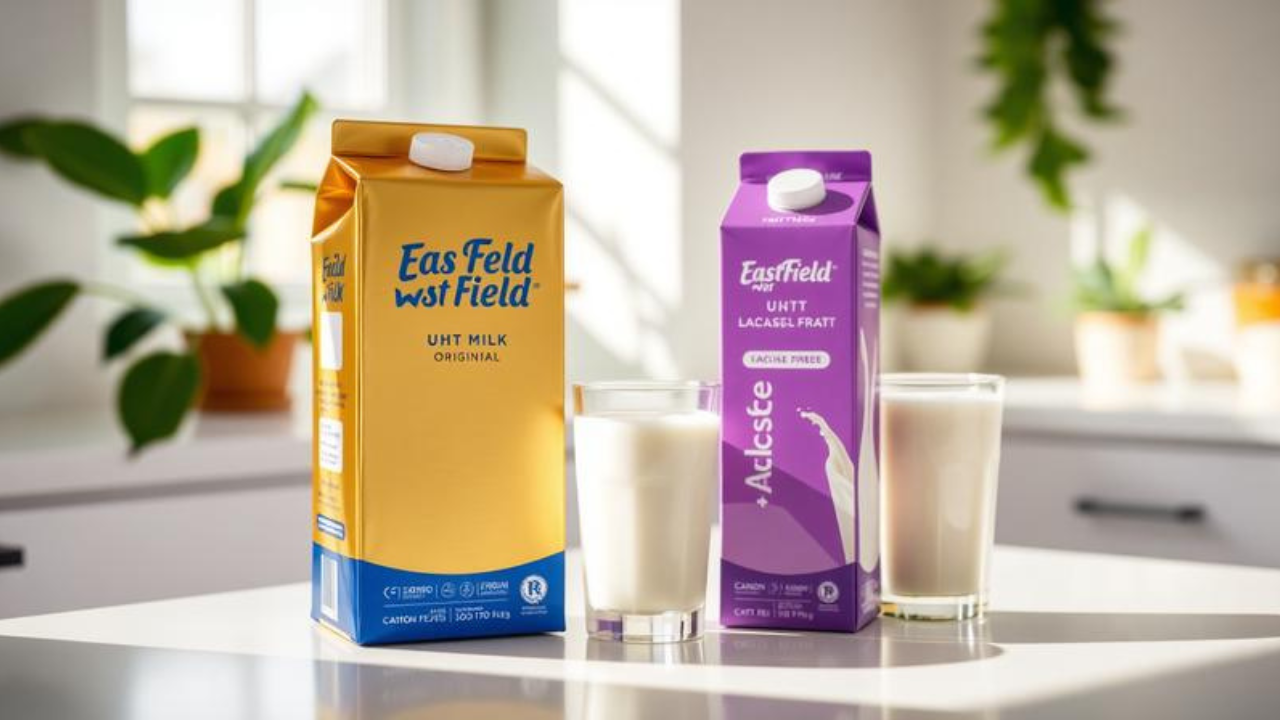
Picture this: you’re standing in the dairy aisle of a Thai supermarket, staring at rows of colorful milk boxes. Your hand hovers over the East Field UHT milk – the gold box or the purple one? But you pause. You’re wondering: Is this actually good for me? You’re not alone.
This guide breaks down East Field UHT milk Thailand nutrition facts in plain, honest language. No confusing jargon, no marketing fluff. We’ll answer the big questions: How does UHT milk compare to fresh milk? What are the downsides? How many calories are in a glass? And is it considered ultra-processed?
By the end of this article, you’ll know exactly what you’re drinking and whether East Field UHT milk deserves a spot in your fridge.
Table of Contents
-
What Is UHT Milk? A Simple Breakdown
-
Why Does UHT Milk Matter? The Real Benefits
-
East Field UHT Milk Nutrition – Key Facts at a Glance
-
How to Choose the Best UHT Milk for Your Needs
-
Common Myths About UHT Milk – Busted
-
Expert Tips for Getting the Most Out of UHT Milk
-
Frequently Asked Questions
-
Conclusion
What Is UHT Milk? A Simple Breakdown
UHT stands for Ultra-High Temperature pasteurization. It’s a process where milk is heated to around 135–140°C for 2–5 seconds, then rapidly cooled and packaged in sterile containers. This kills virtually all bacteria and spores, giving the milk a long shelf life without refrigeration – up to 6–9 months unopened.
Think of it like this: fresh milk is like fresh bread – it goes bad in a few days. UHT milk is like packaged bread – it stays good for months. Both are still bread, but one lasts much longer.
East Field UHT milk is made from 100% pure cow’s milk with no milk powder added. The brand offers two main varieties: the Original formula (gold box) and the Lactose-Free formula (purple box) for people who have trouble digesting lactose. Both are produced in Thailand and have been on the market since 2012.
The UHT process doesn’t add any preservatives. The long shelf life comes entirely from the heat treatment and sterile packaging. So when you’re checking East Field UHT milk Thailand nutrition facts, you’re looking at the nutrition of real cow’s milk – just treated to last longer.
Why Does UHT Milk Matter? The Real Benefits
Why should you care about UHT milk? Here are the real, practical benefits that matter for your daily life:
-
Long shelf life without refrigeration – You can stock up and keep a box in your bag, office drawer, or car. Perfect for busy lifestyles, travel, or emergencies. Unopened UHT milk stays fresh for months at room temperature.
-
No preservatives added – The long shelf life comes from the heat treatment and aseptic packaging, not from chemical additives. You’re drinking pure milk, just processed differently.
-
Convenient for families – If you have kids, UHT milk is a lifesaver. You can buy in bulk, and each small box is portion-controlled and easy for little hands to handle.
-
Nutritionally comparable to fresh milk – Studies show that UHT milk retains most of the nutritional value of fresh pasteurized milk. Proteins and fat-soluble vitamins remain largely unaffected.
-
Lactose-free option available – East Field offers a lactose-free formula for the estimated 65–70% of the global population that has some degree of lactose malabsorption. This lets you enjoy milk without the bloating or discomfort.
-
100% real milk, no powder – East Field prides itself on using only fresh cow’s milk, not reconstituted milk powder. This means you’re getting the real deal, not a powdered imitation.
Did you know? East Field sold over 1 million boxes through online platforms alone in its early years, showing just how popular convenient UHT milk has become in Thailand.
East Field UHT Milk Nutrition – Key Facts at a Glance
Let’s get into the numbers. While exact figures can vary slightly between batches, here’s what you can generally expect from East Field UHT milk Thailand nutrition facts.
East Field UHT Milk – Original Formula (Gold Box)
| Nutrient | Approx. per 100ml | Approx. per 250ml (1 glass) |
|---|---|---|
| Energy | ~64 kcal | ~160 kcal |
| Protein | ~3.5 g | ~8.8 g |
| Total Fat | ~3.4 g | ~8.5 g |
| Carbohydrates | ~4.8 g | ~12.0 g |
| Calcium | ~120 mg | ~300 mg |
| Vitamin B2 | ~0.18 mg | ~0.45 mg |
Note: These are typical values for full-cream UHT milk based on general dairy nutrition data. East Field’s specific label may vary slightly.
East Field UHT Milk – Lactose-Free Formula (Purple Box)
The lactose-free version removes the milk sugar (lactose) but keeps the same protein and calcium content. Calories are similar to the original formula. The main difference is that it’s easier on your stomach if you’re lactose intolerant.
East Field’s Nutritional Highlights
-
High Protein – Around 8.8g per glass, which helps build and repair muscle tissue.
-
High Calcium – Approximately 300mg per glass, supporting strong bones and teeth.
-
Vitamin B2 (Riboflavin) – Helps your body convert food into energy.
-
No milk powder – You’re getting nutrition from real, liquid cow’s milk, not reconstituted powder.
How Does UHT Compare to Fresh Milk?
| Nutrient | UHT Milk | Fresh Pasteurized Milk |
|---|---|---|
| Protein | Same | Same |
| Fat | Same | Same |
| Calcium | Same | Same |
| Vitamin B2 | Slightly reduced | Slightly higher |
| Vitamin C | Reduced | Higher |
| Shelf Life | 6–9 months (unopened) | 7–10 days |
The UHT process causes minor losses of some heat-sensitive vitamins like vitamin C and some B vitamins. However, the macronutrients (protein, fat, carbohydrates) and calcium remain virtually unchanged. For most people, the convenience outweighs these small nutritional differences.
How to Choose the Best UHT Milk for Your Needs
Picking the right UHT milk doesn’t have to be complicated. Follow these simple steps to choose the best option for you and your family:
Step 1: Check the label for “100% fresh milk” or “no milk powder added.” East Field clearly states this on its packaging. Avoid products that list “reconstituted milk” or “milk powder” as main ingredients.
Step 2: Decide between Original and Lactose-Free. If you get bloating, gas, or stomach discomfort after drinking regular milk, go for the lactose-free (purple box) version. If you have no issues, the Original (gold box) is perfectly fine.
Step 3: Consider your fat preference. East Field offers whole milk options. If you’re watching your fat intake, look for “low fat” or “skim” variants (though East Field’s main offerings are full-cream).
Step 4: Check the expiration date. Even though UHT milk lasts a long time, always check the date. Rotate your stock so you consume the oldest boxes first.
Step 5: Store properly after opening. Once you open a UHT milk carton, treat it like fresh milk – refrigerate it and consume within 3–5 days. Don’t leave it out at room temperature after opening.
Step 6: Buy from trusted retailers. East Field is available at major Thai supermarkets like Lotus’s, Big C, Foodland, Tops, and Gourmet Market. You can also find it on Shopee and Lazada through the official Khotcher Store.
Step 7: Try both formulas. If you’re unsure, buy a small pack of each. See which one you (or your kids) prefer in terms of taste and digestibility.
Common Myths About UHT Milk – Busted
Myth 1: “UHT milk is full of preservatives.”
Truth: UHT milk contains zero preservatives. The long shelf life comes from the heat treatment (135–140°C) and sterile packaging, not from chemical additives. The milk is simply heated to kill bacteria, then sealed in a germ-free environment.
Myth 2: “UHT milk has no nutritional value.”
Truth: This is completely false. UHT milk retains most of its nutritional value. Protein, fat, calcium, and many vitamins remain intact. Only small amounts of heat-sensitive vitamins like vitamin C are slightly reduced. You’re still getting high-quality protein and calcium.
Myth 3: “UHT milk tastes unnatural or chemical.”
Truth: UHT milk does have a slightly different flavor – often described as creamier or slightly caramelized. But this is a natural result of the heating process, not chemicals. Many people actually prefer this richer taste.
Myth 4: “Lactose-free milk is less nutritious.”
Truth: Lactose-free milk has the same protein, calcium, and fat as regular milk. The only difference is that the lactose (milk sugar) has been broken down into simpler sugars that are easier to digest. You get all the same nutrients.
Myth 5: “UHT milk is ultra-processed and unhealthy.”
Truth: Under the NOVA classification system, plain UHT milk is considered minimally processed (Group 1 or 2), not ultra-processed (Group 4). Ultra-processed foods contain artificial additives, emulsifiers, and ingredients you wouldn’t find in a kitchen. Plain UHT milk has just one ingredient: milk. Sweetened or flavored milk drinks, however, may fall into the ultra-processed category – so stick to plain, unsweetened versions.
Expert Tips for Getting the Most Out of UHT Milk
-
Keep unopened boxes in a cool, dry place – Away from direct sunlight and heat sources to maintain quality.
-
Chill before drinking – UHT milk tastes best when served cold. Pop it in the fridge for a few hours before opening.
-
Shake well before pouring – Some cream separation can occur during storage. A quick shake mixes everything back perfectly.
-
Use it in cooking – UHT milk works great in sauces, smoothies, oatmeal, and baking. Its long shelf life makes it a handy pantry staple.
-
Rotate your stock – When buying in bulk, use the “first in, first out” rule. Consume older boxes before newer ones.
Frequently Asked Questions
Is UHT milk as healthy as normal milk?
Yes, UHT milk is very similar nutritionally to fresh pasteurized milk. Both provide high-quality protein, calcium, and essential vitamins. The main difference is that UHT processing slightly reduces some heat-sensitive vitamins like vitamin C and B vitamins. However, for most people, this minor loss is outweighed by the convenience of a long shelf life without preservatives. Proteins, fats, and calcium remain virtually unchanged.
What are the disadvantages of UHT pasteurization?
The main disadvantages are minor nutrient losses (some vitamins are reduced by heat) and a slightly different taste – often described as more “cooked” or creamy. Some studies also suggest that UHT processing may cause minor protein changes (like the Maillard reaction), but the overall nutritional impact is small. Additionally, once opened, UHT milk still needs refrigeration and must be consumed within 3–5 days.
How many calories are in 250 ml of UHT milk?
A 250ml glass of full-cream UHT milk contains approximately 150–165 calories. The exact number depends on the fat content. East Field’s full-cream options fall within this range. For comparison, skim or low-fat UHT milk has fewer calories – around 90–100 calories per 250ml. Always check the nutrition label on your specific carton for the most accurate figure.
Conclusion
Let’s recap the three most important takeaways about East Field UHT milk Thailand nutrition facts:
-
Nutritionally solid – UHT milk retains most of the goodness of fresh milk, including high-quality protein, calcium, and essential vitamins. The small losses in heat-sensitive vitamins are negligible for most people.
-
Convenient and safe – The long shelf life comes from heat treatment and sterile packaging, not preservatives. It’s perfect for busy families, travel, and emergency supplies.
-
Not ultra-processed – Plain, unsweetened UHT milk is minimally processed with just one ingredient: milk. It’s a healthy choice, especially compared to sugary flavored milk drinks.
So next time you’re in the dairy aisle, grab that East Field UHT milk with confidence. Whether you choose the gold box (Original) or the purple box (Lactose-Free), you’re getting real, nutritious milk that fits your lifestyle.
Try it today – pour yourself a cold glass and taste the difference. And hey, let me know in the comments: Which East Field formula is your favorite – Original or Lactose-Free?