
Introduction
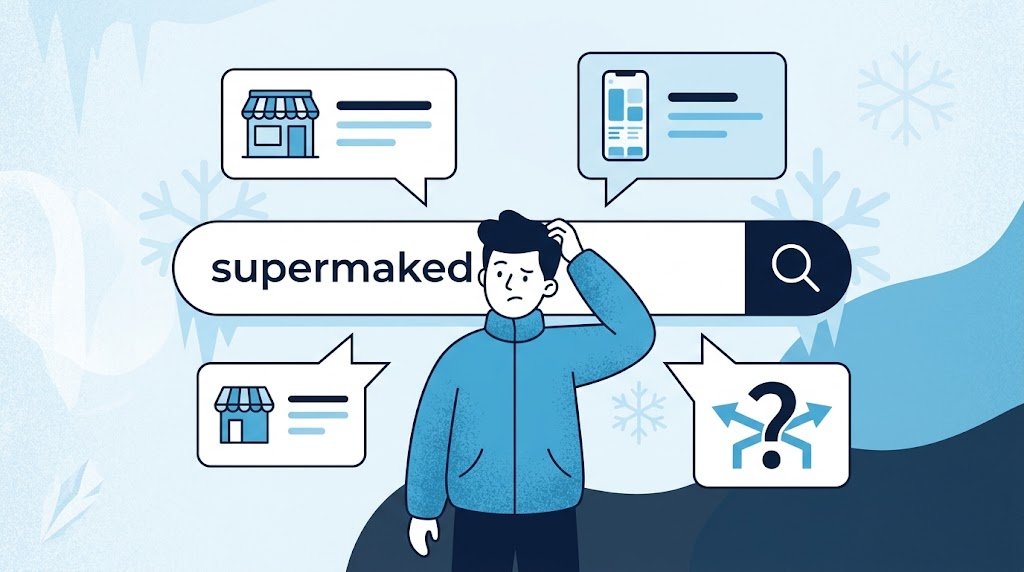
You typed supermaked into Google expecting a quick answer, and instead you got a dozen articles that all disagree with each other. One site calls it a “modern retail trend.” Another says it’s a European grocery brand. A third claims it’s an AI-powered shopping platform. That’s a strange sign, and it means something worth understanding.
Here’s the honest answer: supermaked is not a real, established word, brand, or business. It doesn’t appear in any dictionary, and no verified company uses that name. What you’re actually seeing is a wave of newly published websites racing to “define” a term that doesn’t have a fixed meaning yet.
This article walks you through what’s really going on with supermaked, why so many conflicting explanations exist, how this kind of content gets created, and how to spot it next time you search something unfamiliar. By the end, you’ll know exactly how to answer the question “what is supermaked?” — honestly.
Table of Contents
- What Is Supermaked, Really?
- Why This Matters for Every Internet Searcher
- Supermaked — Key Facts and Competing Claims
- How to Investigate a Confusing Search Term
- Common Mistakes People Make With Supermaked
- Expert Tips for Spotting Fabricated Content
- Frequently Asked Questions
What Is Supermaked, Really?
Supermaked is a word that started showing up across the internet without ever having one clear, agreed-upon definition. Think of it like a rumor that spreads at school — nobody remembers who started it, but by the time it reaches you, five different people are telling five different versions.
In this case, the “rumor” is a search term, and the people spreading it are websites competing to rank on Google. Several of these sites even admit, in their own wording, that supermaked “does not currently have one clear, widely accepted meaning.” Others simply invent a definition and present it as fact, hoping readers won’t compare it against competing pages.
The most likely origin is a misspelling or stylized variation of “supermarket,” possibly generated or amplified through automated content tools. Once one site published a confident-sounding “explainer,” others followed, each adding new invented details to seem more authoritative. That’s how a meaningless term can end up with dozens of “complete guides” and zero real substance behind it.
Why This Matters for Every Internet Searcher
Understanding what happened with supermaked matters because this pattern repeats constantly online. Here’s why it’s worth paying attention to:
- It reveals how search rankings can be gamed. A term with zero real meaning can still generate multiple “definitive guide” articles within weeks.
- It shows you how fast misinformation spreads. Each new article treats earlier fabricated claims as background fact, reinforcing a false impression of legitimacy.
- It protects you from wasted time. Recognizing this pattern helps you stop searching for a product, app, or store that doesn’t exist.
- It builds your research skills. Learning to spot one fabricated term makes it easier to catch the next one.
- The scale is real. Search-visibility researchers at outlets like have documented rapid growth in AI-generated “explainer” content clusters built around low-competition, invented, or ambiguous keywords.
Once you notice this pattern with supermaked, you’ll start spotting it everywhere.
Supermaked — Key Facts and Competing Claims
What the Sites Actually Say
No two sources describing supermaked agree with each other, which is itself the clearest evidence that nothing solid is behind the term.
The Retail-Trend Claim
Some pages describe supermaked as a general “modern retail trend” focused on convenience, personalization, and faster checkout. This explanation is vague enough to apply to almost any store, which makes it easy to write about without stating anything specific or checkable.
The Brand-Name Claim
A different set of pages claims supermaked is a real business name used by “local grocery stores, particularly in Europe.” No verifiable store, address, or company registration backs this claim anywhere.
The Misspelling Claim
A smaller number of sources treat it honestly, suggesting it’s likely a spelling variation of “supermarket” that spread through translation tools or automated writing software.
Quick Comparison Table
| Claim | What It Says | Verifiable? |
|---|---|---|
| Retail trend | A modern shopping experience concept | No — no data or sources cited |
| Brand name | A European grocery store chain | No — no company records found |
| AI shopping platform | A tech-driven retail system | No — no product, app, or company exists |
| Misspelling | A variant of “supermarket” | Most plausible, though still unconfirmed |
Every version above comes from a website with no author name, no sources, and no way to verify its claims — a strong signal to treat all of them with skepticism.
How to Investigate a Confusing Search Term
- Search the exact phrase in quotation marks. This filters out loosely related results and shows you exactly which pages use the term and how.
- Check for a Wikipedia page or dictionary entry. Real, established concepts almost always have one; invented terms usually don’t.
- Compare definitions across the top five results. If they contradict each other, that’s a reliable sign the term has no fixed meaning.
- Look for named sources, data, or citations. Legitimate explainer content links to studies, companies, or people. Fabricated content rarely does.
- Check the publish dates. A sudden cluster of “complete guide” articles appearing within the same few months usually means content creators are chasing a trending keyword, not reporting on something real.
- Search the site’s “About” page. Many fabricated-content sites lack a real company name, address, or team bio, which tells you how much to trust their claims.
Following these steps takes a few extra minutes but saves you from repeating false information as fact.
Common Mistakes People Make With Supermaked
- Assuming a confident tone means accurate information. The truth: fabricated content often sounds more polished and certain than genuine reporting.
- Trusting the first search result automatically. The truth: ranking position reflects SEO tactics, not accuracy.
- Believing repetition equals proof. The truth: ten articles repeating the same invented claim doesn’t make that claim true.
- Searching for a “Supermaked app” or “Supermaked store” near you. The truth: no verified app or store chain by that name currently exists.
- Assuming every unfamiliar word is simply new slang. The truth: some terms are genuinely new, but others are manufactured purely to attract search traffic.
Expert Tips for Spotting Fabricated Content
- Watch for vague, feel-good language like “convenience,” “experience,” and “modern” used without any specific detail behind them.
- Cross-check any statistic against the original source before repeating it — fabricated content often cites no source at all.
- Notice repeated sentence structures across different sites, since content-farm articles often reuse near-identical phrasing.
- Search the exact term plus the word “fake” or “real” to see if other researchers have already flagged it.
- Trust primary sources — company websites, verified news outlets, or academic research — over unnamed “guides” and “explainers.”
Frequently Asked Questions
Is supermaked a real store or company? No verified store, brand, or company currently uses the name supermaked. Several websites claim it refers to a grocery chain, particularly in Europe, but none provide a verifiable address, registration, or official website. Until real evidence appears, treat any such claim as unconfirmed.
Why do so many websites have different definitions for supermaked? This happens because supermaked likely has no fixed original meaning, so each website that tries to “explain” it ends up inventing its own version. Once early articles gained search visibility, later ones copied and expanded on those unverified claims, creating a cycle of repeated misinformation.
Is supermaked just a misspelling of supermarket? That’s the most reasonable explanation available right now. The two words look and sound similar, and the spelling likely spread through automated translation or content tools before multiple sites turned it into a full “trend” without solid evidence.
Conclusion
Supermaked isn’t a real brand, app, or retail trend — it’s a clear example of how confusing, contradictory search results can appear around a term that simply doesn’t have an established meaning. Remember three things: no verified company or product uses this name, the dozens of “guides” online contradict each other because none are working from real facts, and the most likely explanation is a misspelling of “supermarket” that spread through content written to chase search traffic.
Start today by applying the same skepticism to the next confusing term you search. A few extra minutes of checking sources can save you from repeating something that was never true in the first place, and it makes you a sharper reader every time you’re online. Have you come across other words online that seemed to have ten different definitions and zero real sources — share what you found in the comments below.