
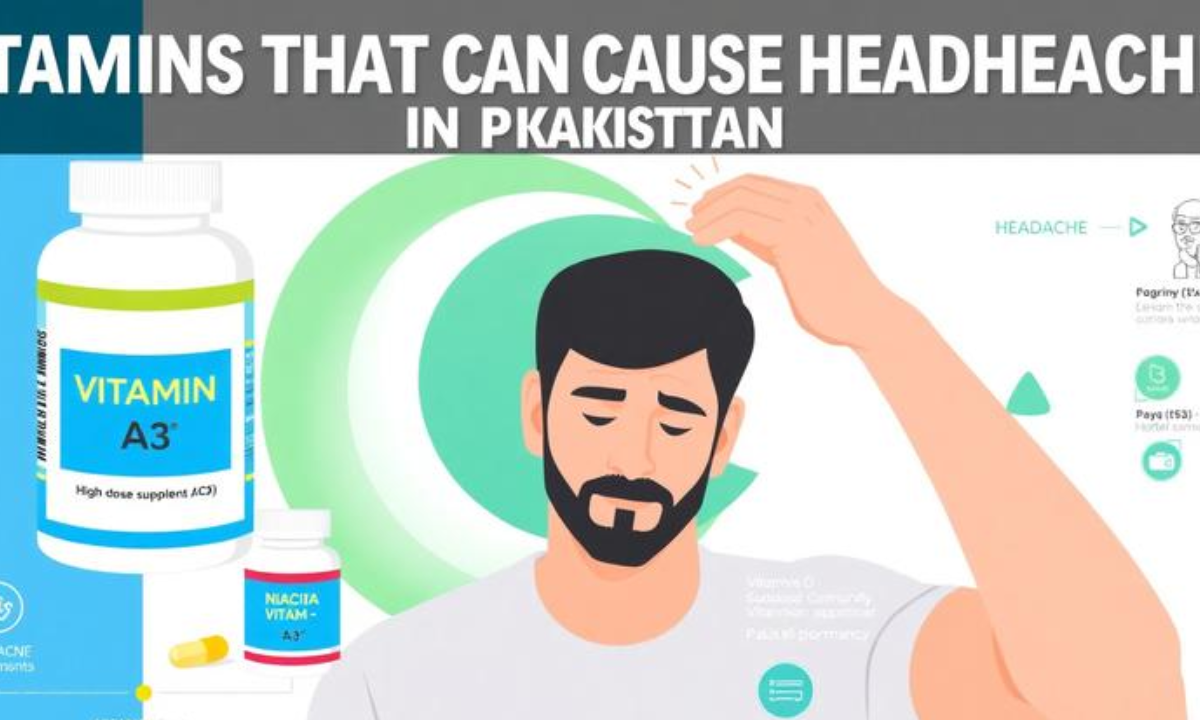
Many people in Pakistan start taking vitamins to improve energy, immunity, hair growth, or bone health, then notice an unexpected problem: recurring headaches. The connection is often overlooked because supplements are generally viewed as harmless.
In reality, certain vitamins and minerals can trigger headaches when taken in excessive amounts, combined with other supplements, or used despite an underlying medical condition. Understanding vitamins that cause headaches in Pakistan is especially important because self-medication, high-dose multivitamins, and unregulated supplement use are common.
This guide explains which vitamins are most likely to cause headaches, why the reaction occurs, how to identify the warning signs, and when to seek medical advice. It also helps Pakistani consumers choose supplements more safely and avoid unnecessary side effects.
Why Some Vitamins Trigger Headaches
Headaches linked to supplements usually occur through one of four mechanisms:
-
Excess dosage: The body receives more of a vitamin than it can safely use.
-
Blood vessel changes: Certain nutrients affect circulation and may trigger migraine-like symptoms.
-
Electrolyte imbalance: Minerals such as calcium or magnesium can influence nerve signaling.
-
Interaction with medications: Supplements may amplify the effects of blood pressure medicines, migraine treatments, or other drugs.
In Pakistan, another factor is unsupervised supplementation. Many people take multiple products simultaneously—such as a multivitamin, a hair supplement, vitamin D sachets, and energy boosters—without calculating the total dose.
A headache that begins after starting a new supplement and improves when it is stopped deserves careful evaluation.
Vitamin A: One of the Most Common Causes
Among the vitamins that cause headaches in Pakistan, Vitamin A is one of the most significant. Because it is fat-soluble, the body stores excess amounts rather than excreting them quickly.
Symptoms of too much vitamin A
-
Persistent headache
-
Nausea
-
Blurred vision
-
Dizziness
-
Skin dryness
-
Fatigue
Many imported beauty, skin, and hair supplements contain high levels of vitamin A or retinol. Taking these alongside a multivitamin can push intake above the recommended limit.
High-risk combination
Hair-growth supplement with vitamin A + multivitamin + cod liver oil
This combination can substantially increase total vitamin A intake.
People who experience pressure-like headaches behind the eyes after starting a new beauty supplement should check the vitamin A content first.
Vitamin D Excess and Headaches
Vitamin D deficiency is widespread in Pakistan, so doctors frequently prescribe supplements. The problem arises when high-dose sachets or injections are continued for months without follow-up testing.
How excess vitamin D causes headaches
Too much vitamin D can increase calcium levels in the blood, leading to:
-
Headaches
-
Thirst
-
Frequent urination
-
Constipation
-
Weakness
-
Confusion in severe cases
Many adults continue taking 50,000 IU weekly sachets long after deficiency has been corrected. This increases the risk of vitamin D toxicity, especially when combined with calcium supplements.
If headaches appear after prolonged high-dose vitamin D use, a serum vitamin D and calcium test may be appropriate.
Niacin (Vitamin B3) and Vascular Headaches
Niacin is included in many energy, fitness, and metabolism-boosting supplements sold in Pakistan.
Why niacin can trigger headaches
Niacin causes vasodilation, meaning blood vessels widen. This can produce:
-
Flushing of the face
-
Warmth or burning sensation
-
Throbbing headache
-
Lightheadedness
The effect is more noticeable in people prone to migraines.
Common sources
-
Pre-workout powders
-
Energy capsules
-
Fitness supplements
-
High-potency B-complex products
A headache that starts within 30–60 minutes of taking an energy supplement often points toward niacin.
Iron Supplements and Headache Risk
Iron supplements are widely used, particularly among women with anemia. While iron itself is less likely to cause headaches than vitamin A or niacin, excessive supplementation can contribute to symptoms.
Possible signs of excess iron intake
-
Headache
-
Stomach pain
-
Nausea
-
Constipation
-
Dark stools
Some individuals continue iron therapy even after hemoglobin levels normalize. Taking multiple iron-containing products at the same time increases the likelihood of side effects.
When iron is less likely to be the cause
-
Headaches began before iron treatment
-
Symptoms occur only after taking vitamin D or a multivitamin
-
The supplement contains several other high-dose vitamins
Comparison: Which Vitamins Cause Headaches Most Often?
|
Supplement |
Headache Risk |
Typical Pattern |
|---|---|---|
|
Vitamin A |
High |
Persistent pressure-like headache |
|
Vitamin D (excess) |
Moderate to High |
Headache with thirst and weakness |
|
Niacin (B3) |
Moderate |
Throbbing headache after dosing |
|
Iron (excess) |
Low to Moderate |
Headache with stomach symptoms |
|
Vitamin B6 |
Low |
Usually only at very high doses |
|
Vitamin C |
Low |
Rarely causes headaches directly |
Why This Problem Is Common in Pakistan
Several local factors increase the likelihood of supplement-related headaches:
1. Self-prescribed vitamin use
Many supplements are purchased directly from pharmacies without medical evaluation.
2. Multiple overlapping products
A person may take:
-
Multivitamin
-
Hair-growth supplement
-
Vitamin D sachet
-
Calcium tablet
-
Energy drink or fitness supplement
The combined intake can exceed safe limits.
3. Imported products with higher doses
Some imported supplements contain vitamin levels designed for different regulatory standards and dietary patterns.
4. Lack of follow-up testing
Vitamin D, iron, and calcium therapy often continues without repeat blood tests.
How to Tell if a Vitamin Is Causing Your Headache Strong clues
-
Did the headache start within days or weeks of starting a supplement?
-
Does it occur soon after taking the dose?
-
Has the frequency increased since beginning supplementation?
-
Do symptoms improve when the supplement is stopped (with medical guidance)?
-
Are you taking more than one vitamin product?
Seek urgent medical care if Urgent
-
Sudden severe headache
-
Vision changes
-
Weakness or numbness
-
Confusion
-
Persistent vomiting
-
High fever
Safe Supplement Practices Before starting vitamins
-
Review all current supplements.
-
Check the dose of vitamin A, vitamin D, and niacin.
-
Discuss chronic headaches with a healthcare professional.
While taking supplements
-
Take only the recommended dose.
-
Avoid duplicate ingredients.
-
Stay well hydrated.
-
Keep a headache diary noting timing and severity.
If headaches develop
-
Do not automatically increase the dose.
-
Review all supplement labels.
-
Seek medical advice if symptoms persist beyond a few days.
FAQ: Vitamins That Cause Headaches in Pakistan
Can vitamin D deficiency itself cause headaches?
Yes. Both vitamin D deficiency and excess vitamin D supplementation can be associated with headaches. Blood testing helps determine the actual cause.
Which vitamin causes migraines most often?
Niacin (vitamin B3) is one of the vitamins most commonly linked to migraine-like throbbing headaches because it affects blood vessel dilation.
Can multivitamins cause daily headaches
Yes. A multivitamin containing high vitamin A, niacin, or other concentrated nutrients may contribute to daily headaches, especially when combined with additional supplements.
Should I stop my vitamins if I get a headache?
Do not stop prescribed supplements without medical advice. If the headache began after starting a new over-the-counter vitamin, contact a healthcare professional to review the product and dosage.
Are imported supplements safer than local ones?
Not necessarily. Safety depends on quality control, ingredient accuracy, and appropriate dosing, not simply whether the product is imported.
Conclusion
Understanding vitamins that cause headaches in Pakistan can help you avoid unnecessary discomfort and identify supplement-related problems early. Vitamin A, excess vitamin D, and niacin (B3) are among the most common culprits, especially when multiple products are taken together.
If you have developed headaches after starting a vitamin or supplement, review the ingredients, calculate the total daily intake, and discuss the symptoms with a qualified healthcare professional. A simple medication and supplement review often identifies the cause before the headaches become a long-term problem.
For the safest results, choose supplements based on confirmed deficiencies, medical advice, and appropriate dosing rather than marketing claims or self-prescribed combinations.