
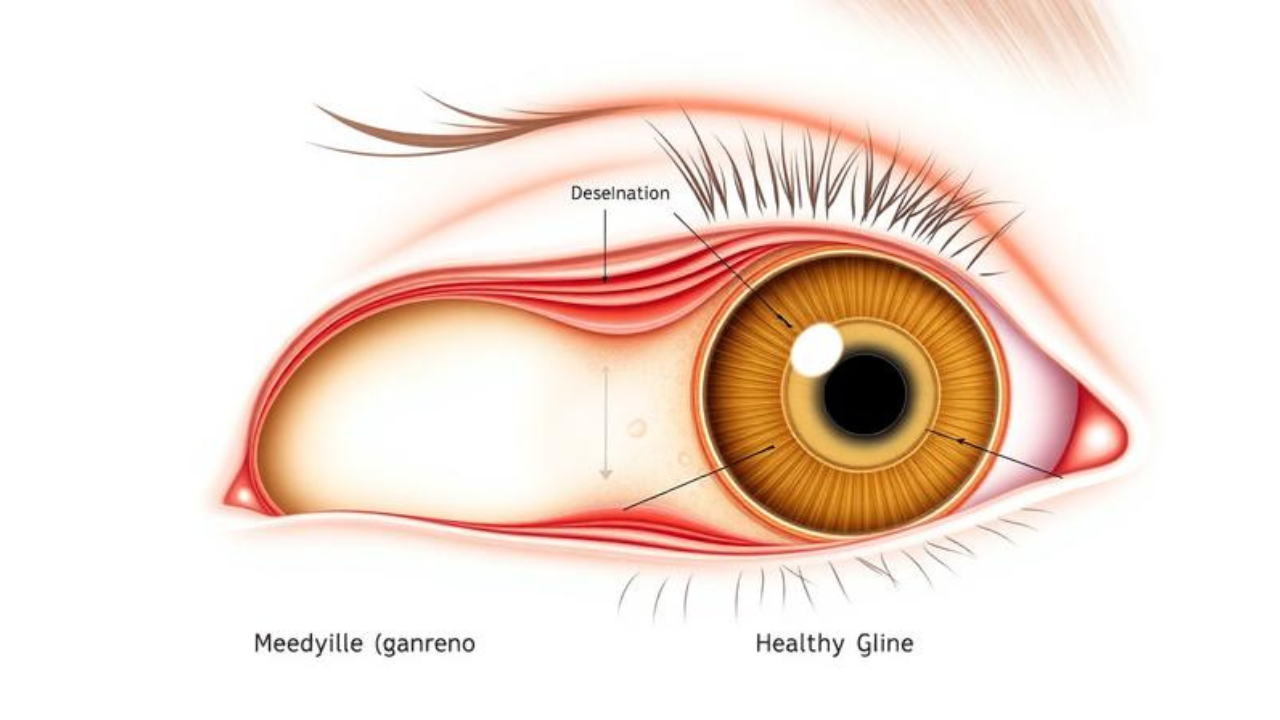
A painless lump on your eyelid can be surprisingly unsettling, especially when it lingers for weeks. Many people assume it is a stye and try to treat it as an infection, only to find that the bump remains unchanged.
A chalazion is different from a stye. It develops when an oil-producing gland in the eyelid becomes blocked, leading to a firm lump that often requires a different treatment approach. This guide explains what causes a chalazion, how to identify it, how to get rid of a chalazion, and when professional medical care is the safest option.
What Is a Chalazion?
A chalazion is a localized swelling in the eyelid caused by blockage of a meibomian gland, one of the tiny glands that secrete oil into the tear film. When the gland becomes obstructed, the trapped oil triggers inflammation and forms a firm lump.
Unlike a stye, a chalazion is usually not an active bacterial infection. That is why it tends to be less painful and may persist for weeks or months if the blockage does not clear.
Typical features include:
-
A firm, round lump inside the eyelid
-
Mild or no pain
-
Gradual enlargement over several days
-
Localized swelling
-
Occasional blurry vision if the lump becomes large
Chalazia can occur on either the upper or lower eyelid, though they are more common in the upper lid because it contains more meibomian glands.
Chalazion vs. Stye: Why the Difference Matters
Many eyelid lumps are mistakenly called styes. Knowing the difference helps you choose the right treatment.
|
Feature |
Chalazion |
Stye |
|---|---|---|
|
Pain |
Usually mild or absent |
Often painful |
|
Cause |
Blocked oil gland |
Bacterial infection |
|
Location |
Deeper in the eyelid |
Near the eyelash line |
|
Redness |
Mild |
More pronounced |
|
Pus |
Rare |
Common |
|
Primary treatment |
Warm compresses |
Infection management |
A useful clue
If the bump started as a painful stye and later became a firm, painless nodule, it may have evolved into a chalazion after the initial infection subsided.
What Causes a Chalazion?
The underlying problem is usually meibomian gland dysfunction, where the oil produced by the glands becomes thick and does not drain normally.
Common risk factors
-
Blepharitis (chronic eyelid inflammation)
-
Rosacea
-
Seborrheic dermatitis
-
Previous chalazia
-
Heavy eye makeup use
-
Poor eyelid hygiene
-
Contact lens irritation
Why some people get them repeatedly
People with chronic eyelid inflammation often produce thicker oil secretions. The glands become blocked repeatedly, leading to recurrent chalazia in the same or different areas of the eyelid.
Where an external source would help
[External citation opportunity: Reference the American Academy of Ophthalmology for evidence-based information on meibomian gland dysfunction and chalazion management.]
Symptoms and Warning Signs
Symptoms usually develop gradually rather than appearing overnight.
Common symptoms
-
A small lump inside the eyelid
-
Localized swelling
-
A feeling of heaviness in the eyelid
-
Increased tearing
-
Mild tenderness early on
-
Blurred vision if the lump presses against the cornea
When vision is affected
A large chalazion can temporarily change the shape of the cornea, causing distorted or blurry vision. This usually improves after the lump resolves.
When to seek prompt medical care
-
Severe pain
-
Rapidly spreading redness
-
Fever
-
Sudden vision changes
-
Swelling extending beyond the eyelid
-
A lump that bleeds or changes appearance
How to Get Rid of a Chalazion
If you are searching for how to get rid of a chalazion, the most effective first step is consistent warm compress therapy.
Step-by-step home treatment
Apply a warm compress
Use a clean washcloth soaked in warm water.
Hold it against the closed eyelid for 10–15 minutes
Rewarm the cloth as needed.
Repeat 3–6 times daily
Consistency matters more than a single long session.
Gently massage the eyelid
Move toward the lash line with a clean finger.
Keep the eyelid clean
Use a doctor-recommended eyelid cleanser if advise
Avoid these mistakes
-
Do not squeeze the lump.
-
Do not puncture it with a needle.
-
Do not apply harsh chemicals or home remedies near the eye.
-
Do not continue using irritating eye makeup.
Expected timeline
Small chalazia often improve within 1–4 weeks. Larger ones may persist for several months if the blockage does not drain.
Medical Treatments for Persistent Chalazia
When home treatment fails, an eye care professional may recommend additional options.
Prescription medications
Antibiotic or anti-inflammatory treatment may be used if significant eyelid inflammation or an associated infection is present.
Steroid injection
A small corticosteroid injection can reduce inflammation and shrink the lump without surgery.
Incision and curettage
This minor procedure involves making a small opening in the eyelid and removing the trapped material from the gland. It is typically performed under local anesthesia.
When surgery is considered
-
The chalazion lasts longer than 1–2 months
-
It causes vision problems
-
It recurs in the same location
-
It becomes cosmetically bothersome
-
Conservative treatment does not work
Where another external source would help
[External citation opportunity: Reference Mayo Clinic or a peer-reviewed ophthalmology guideline for indications for steroid injection or surgical drainage.]
Preventing Future Chalazia
Prevention focuses on keeping the meibomian glands functioning normally.
Daily habits that help
-
Remove eye makeup completely before sleeping
-
Wash your face and eyelids regularly
-
Replace mascara every three months
-
Avoid rubbing your eyes
-
Manage blepharitis or rosacea if you have those conditions
-
Use warm eyelid compresses regularly if recommended by your eye doctor
For people with recurrent chalazia
Long-term eyelid hygiene is often more effective than repeatedly treating individual lumps. Addressing the underlying gland dysfunction reduces the chance of future blockages.
FAQ: Chalazion
Can a chalazion go away on its own?
Yes. Many chalazia resolve without surgery, especially when treated with warm compresses several times daily.
How do I know if it is a chalazion or a stye?
A stye is usually painful and red, while a chalazion is typically a firm, painless lump that develops gradually.
How to get rid of a chalazion quickly?
Warm compresses combined with gentle eyelid massage offer the best chance of early resolution. There is no safe way to remove a chalazion instantly at home.
Is a chalazion contagious?
No. A chalazion results from a blocked oil gland and is not considered contagious.
Can stress cause a chalazion?
Stress is not a direct cause, but it may contribute indirectly by affecting skin conditions, eyelid inflammation, and eye-rubbing habits.
Conclusion
A chalazion is a common eyelid condition caused by a blocked meibomian gland. The lump is usually painless, develops gradually, and often responds well to warm compresses and gentle eyelid massage.
If you are trying to determine how to get rid of a chalazion, start with consistent home treatment for several weeks. Seek professional evaluation if the lump persists, affects your vision, becomes painful, or keeps returning. Early treatment can identify underlying eyelid problems and help prevent future episodes.
For persistent or recurrent eyelid lumps, schedule an appointment with an eye care professional to confirm the diagnosis and discuss the most effective treatment options.