

Introduction
Scroll through TikTok or YouTube for five minutes, and you’ll inevitably stumble across a video promising a chiseled jawline with nothing more than a simple tongue exercise. The transformation clips are dramatic—rounded faces morphing into sharp, defined jawlines in what appears to be weeks or months. It’s compelling, it’s free, and it seems almost too good to be true. The problem? Millions of people are now spending hours each day obsessing over tongue placement, wondering why they aren’t seeing the same results as the influencers in their feeds. This article cuts through the hype to deliver what the science actually says about mewing, whether it works, and—most importantly—whether it’s safe to try.
What Is Mewing?
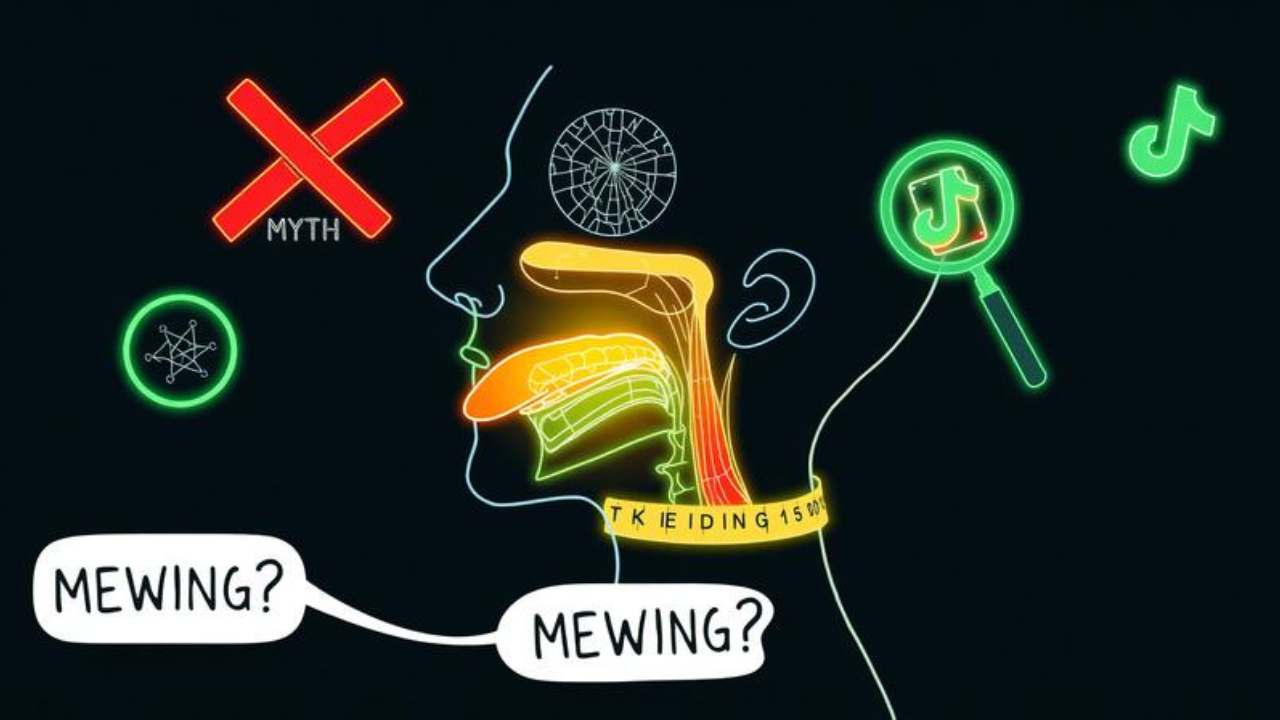
Mewing is a form of oral posture training that involves placing your tongue flat against the roof of your mouth and applying pressure. The technique was developed by British orthodontists John Mew and his son Mike Mew as part of a practice called “orthotropics”. The theory behind it suggests that modern diets of soft foods have led to underdeveloped jaws, and that by retraining tongue posture, you can encourage proper jaw growth, straighten teeth, and improve facial aesthetics.
John Mew originally developed the technique in the 1970s for use in his children and patients, believing it could correct misalignments in the teeth, sinuses, jaw, and facial structure. However, the practice only exploded in popularity in recent years, thanks to social media platforms where influencers post before-and-after transformation videos claiming dramatic results.
It’s worth understanding the context: mewing originated within online incel and looksmaxxing communities in the mid-2010s before going mainstream. Its creator, Mike Mew, was expelled from the British Orthodontic Society and in 2024 was struck off the dental register in the United Kingdom. A misconduct hearing found he had posed harm to child patients who underwent his treatments.
Why It Matters: The Claims vs. The Reality
What Proponents Claim
Mewing enthusiasts believe that consistent practice can deliver an impressive list of benefits:
-
Reshaping the face and creating a defined jawline
-
Straightening teeth and improving bite alignment
-
Improving breathing and reducing sleep apnea
-
Correcting speech disorders
-
Alleviating temporomandibular joint (TMJ) disorders
-
Improving posture
What the Science Actually Says
Here’s the uncomfortable truth: no credible scientific research has ever proven the efficacy of orthotropics or mewing. The American Association of Orthodontists states that “to date, there is not one single piece of credible scientific evidence that supports the claim that simply changing your tongue position can lead to a more desirable jawline”.
Cleveland Clinic family medicine practitioner Dr. Colleen Clayton puts it bluntly: “Unfortunately, research doesn’t support using mewing for any of these things. The evidence soundly suggests that it isn’t effective for any of the claims”. She emphasizes that “this simple tongue exercise isn’t a robust enough treatment… It’s just not a fix”.
The British Orthodontic Society has described orthotropics as “modern-day quackery” with claims that have “no basis whatsoever in rigorously tested scientific fact”.
Why Before-and-After Photos Are Misleading
Those dramatic before-and-after photos you see online? They’re largely unreliable. Photo angling and lighting can be deceiving, and many of the most compelling transformations involve adolescents whose faces are naturally changing due to puberty—independent of any tongue technique.
As one expert notes, “Mewing is great when posing for photos, but it does not alter the jawline permanently”. The position helps the jaw look sharper temporarily and can reduce the appearance of a double chin for a swift before-and-after shift—but “it will lose its effect as soon as you rest your tongue back in its normal position”.
Step-by-Step: How Mewing Is Supposed to Be Done
If you’re still curious about the technique itself, here’s how it’s typically described:
The Basic Technique
-
Place the tip of your tongue on the roof of your mouth, just behind your teeth—in the position to make the “n” sound
-
Close your lips and lightly close your teeth
-
Flatten your tongue against the roof of your mouth over the entire area, especially in the posterior third
-
Feel your jaw muscles engage and hold the position
-
Hold for 20 seconds and then rest
-
Repeat several times a day—you’ll have to train yourself to return to this position naturally
How Long Does It Take?
Some mewing sources claim most people will see results in 3 to 6 months, while others may need 1 to 2 years. However, these timelines are not supported by evidence, and the “results” people report are often temporary postural changes rather than permanent structural ones.
Common Mistakes to Avoid
Mistake 1: Expecting Permanent Structural Change
The single most common mistake is believing mewing can reshape adult facial bones. Jaw growth primarily happens during childhood and adolescence. “Even if it did work, it is intended to be used for children, and likely would have no effect for adults whose jaws are already fully grown”. A complex interplay of genetics, bone growth, and muscle development influences facial structure—simply changing tongue placement isn’t enough to magically correct misaligned teeth or reshape your jawline.
Mistake 2: Applying Too Much Pressure
Your tongue is one of the strongest muscles in your body. Improperly forcing it into unnatural positions can lead to undesired effects. Excessive pressure can disrupt the natural alignment of teeth, particularly if the tongue isn’t positioned evenly across the palate. Many people who’ve tried mewing have ended up with crooked teeth, trouble chewing or speaking, and other oral health issues.
Mistake 3: Ignoring Pain Signals
Mewing should not hurt or cause pain. If you experience pain, discomfort, or pressure, you’re doing something wrong—and continuing could cause damage. Common issues from improper mewing include:
-
Jaw problems and temporomandibular joint (TMJ) pain
-
Tooth damage and misaligned teeth
-
Loose teeth
-
Tooth wear and enamel damage
-
Speech impediments from altered tongue placement
Mistake 4: Mouth Breathing While Mewing
Proper mewing technique requires nasal breathing. If you can’t breathe through your nose while maintaining the tongue position, you’re either doing it incorrectly or may have underlying nasal issues that need medical attention.
Mistake 5: Relying on Mewing Instead of Professional Care
Perhaps the most dangerous mistake is using mewing as a substitute for proper dental or orthodontic treatment. If you have misaligned teeth, bite problems, or jaw pain, these are medical issues that require professional evaluation—not a DIY tongue exercise.
Frequently Asked Questions
Q1: Does mewing actually work?
No credible scientific evidence supports the claim that mewing can permanently reshape your jaw or facial structure. While it may provide a temporary contoured look during photos, it cannot permanently alter bone structure in adults. The American Association of Orthodontists confirms there is “not one single piece of credible scientific evidence” supporting these claims.
Q2: Can mewing be dangerous?
Yes, it can be. Improper mewing can lead to crooked teeth, misaligned bites, trouble chewing or speaking, TMJ pain, loose teeth, and other oral health issues. While not life-threatening, these problems can be costly and complex to correct. The American Association of Orthodontists lists mewing among harmful viral tooth trends to avoid.
Q3: Who created mewing and why is that important?
Mewing was created by British orthodontists John Mew and his son Mike Mew. Mike Mew was expelled from the British Orthodontic Society and in 2024 was struck off the dental register in the United Kingdom. Expert witnesses testified that orthotropics is unsupported by scientific evidence. The technique’s origins in controversial, discredited practices raise important questions about its validity.
Q4: If mewing doesn’t work, how can I actually improve my jawline?
The single most effective intervention for jawline appearance in most adults is reducing overall body fat percentage, particularly in the submental region. A healthy lifestyle involving a nutritious diet and exercise can make your jawline appear more defined. For those seeking more dramatic changes, proven options include orthodontic treatment with braces or aligners, dermal fillers, or surgical procedures—all of which should be discussed with qualified medical professionals.
Q5: Is mewing the same as good tongue posture?
Not exactly. While correct tongue posture (resting the tongue against the roof of the mouth) is associated with healthy dental arch development, mewing takes this further by advocating for active pressure application to reshape facial bones—a claim unsupported by evidence. Normal tongue posture can be beneficial, but mewing’s specific claims about facial restructuring are not scientifically validated.
Conclusion
Mewing is a fascinating case study in how social media can transform an unproven, controversial technique into a global phenomenon. The reality is sobering: no scientific evidence supports mewing’s dramatic claims, its creator was struck off the dental register, and improper practice can actually harm your oral health. The jawline transformations you see online are largely the result of clever angles, lighting, and natural growth in adolescents—not tongue exercises.
If you’re concerned about your jawline, bite, or facial structure, the safest and most effective path is consulting a qualified dentist or orthodontist. They can offer evidence-based treatments that actually work. And if you’re simply looking to enhance your appearance, remember that a healthy diet, regular exercise, and good overall health will do more for your looks than any viral tongue exercise ever could.
Concerned about other viral health trends? Check out our guide on separating fact from fiction in online wellness advice.