
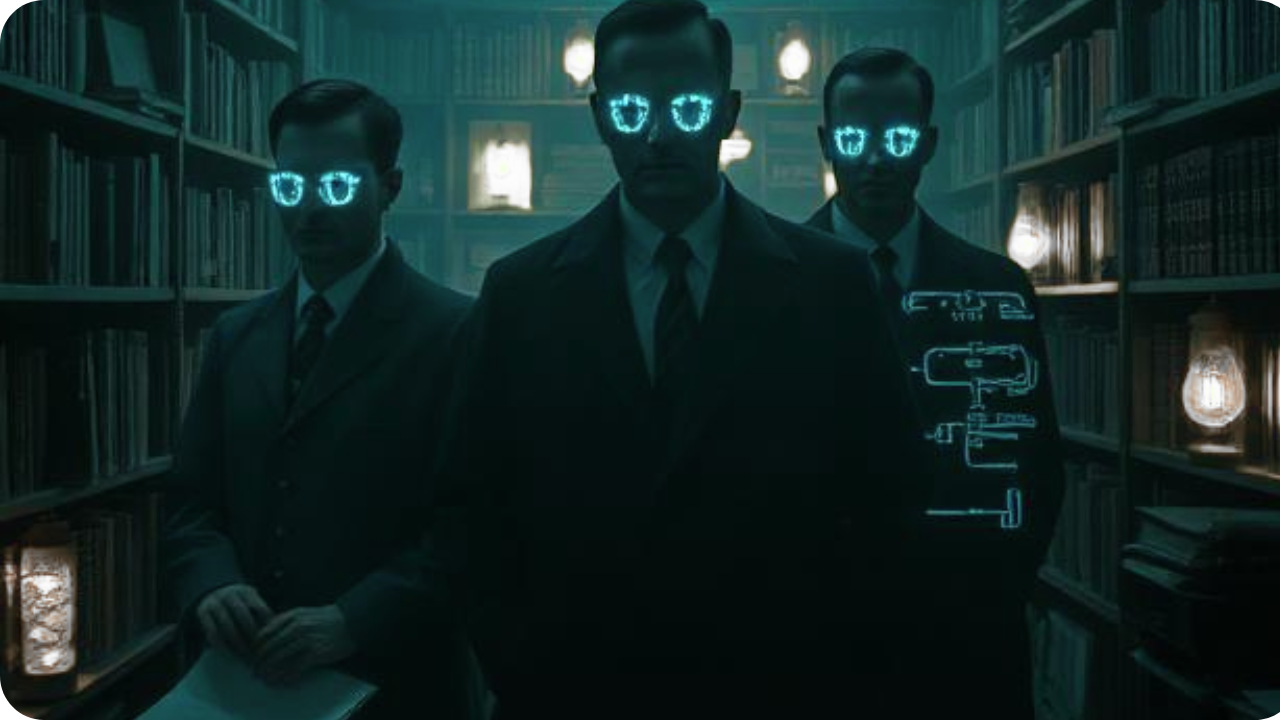
When people discuss history’s great innovators, the same names usually appear: Thomas Edison, Alexander Graham Bell, Marie Curie. Yet many of the breakthroughs that define modern life came from pioneers you’ve never heard of. Their ideas powered computers, transformed medicine, changed public health, and expanded human rights, but their stories rarely make it into textbooks.
This article explores several overlooked figures whose contributions continue to shape the world. Rather than celebrating fame, we will examine impact. These innovators worked in laboratories, workshops, hospitals, and activist movements, often without the recognition granted to more prominent contemporaries. By the end, you will have a deeper understanding of how history is built not only by household names, but also by remarkable individuals who changed the course of events from the shadows.
The Hidden Architects of Everyday Technology
Many of the devices we use daily rely on discoveries made by people who remain largely unknown outside specialist circles. One of the most important is Lewis Latimer. Working during the early development of electric lighting, Latimer improved the carbon filament used in light bulbs, making them more durable and affordable.
Without that improvement, electric lighting would have remained impractical for widespread use. Latimer also contributed to technical drafting and patent work that helped standardize electrical systems.
Why Lewis Latimer Matters
-
Made electric light bulbs last longer.
-
Helped reduce manufacturing costs.
-
Contributed to early electrical infrastructure.
-
Demonstrated how engineering refinement can be as important as original invention.
Another overlooked figure is Granville T. Woods. His inventions improved railway communication systems and safety mechanisms. Modern transportation networks depend heavily on the kind of signaling and communication concepts Woods helped develop.
These pioneers remind us that technological revolutions rarely emerge from a single inventor. They are usually the result of many people improving, adapting, and expanding an idea until it becomes useful at scale.
Pioneers You’ve Never Heard Of in Computing
One of the most influential pioneers you’ve never heard of is Mary Allen Wilkes. In the 1960s, she worked on the LINC, one of the first personal computers designed for individual use rather than large institutions.
At a time when computers filled rooms and were operated by specialists, Wilkes helped create software that made computing more accessible. She even became one of the first people to use a personal computer in her own home.
How Mary Allen Wilkes Anticipated Modern Computing
-
Worked on an early personal computer.
-
Developed operating software for individual users.
-
Demonstrated that computing could move beyond laboratories.
-
Helped lay groundwork for home computing decades before it became common.
Another overlooked computing pioneer is Clarence Ellis. Ellis developed concepts that later became essential for collaborative software, including systems that allow multiple users to work on shared digital documents.
Today, cloud-based collaboration tools are central to business, education, and communication. Ellis helped establish many of the theoretical foundations that make those tools possible.
Medical Innovators Who Saved Millions
Some of history’s most important medical advances came from researchers whose names are rarely recognized. Dr. Virginia Apgar created the Apgar Score, a rapid method for evaluating newborn health immediately after birth.
Before the Apgar Score, doctors lacked a standardized way to assess whether a newborn required urgent medical attention. Her system dramatically improved neonatal care and has been used worldwide for decades.
The Lasting Impact of Virginia Apgar
|
Contribution |
Modern Impact |
|---|---|
|
Apgar Score |
Standard newborn assessment |
|
Rapid health evaluation |
Faster emergency intervention |
|
Clinical standardization |
Consistent care worldwide |
|
Medical training |
Core part of neonatal education |
Another extraordinary figure is Dr. Charles Drew, who developed improved methods for blood storage and blood banks during the 20th century.
His research made large-scale blood preservation practical, a breakthrough that transformed emergency medicine, surgery, and military healthcare. Millions of patients have benefited from systems built on his work.
Social Reformers Who Changed Public Health
Public health history includes pioneers whose contributions are often overshadowed by political leaders and famous physicians. John Snow is sometimes called the father of epidemiology, but another crucial figure is Alice Hamilton.
Hamilton investigated the effects of industrial chemicals on workers during a period when factory safety received little attention. Her research exposed the dangers of lead poisoning and other occupational hazards.
What Alice Hamilton Changed
-
Documented workplace exposure to toxic substances.
-
Influenced labor safety regulations.
-
Advanced occupational medicine as a scientific field.
-
Improved protections for industrial workers.
Many modern workplace safety standards trace their origins to investigations conducted by Hamilton and other early occupational health pioneers.
Explorers and Scientists History Forgot
Scientific discovery often rewards the person who publishes first, not necessarily the person who did the foundational work. Henrietta Swan Leavitt is a striking example.
Leavitt discovered a relationship between the brightness and pulsation period of certain stars, known as Cepheid variables. Her work provided a critical tool for measuring cosmic distances.
Later astronomers used her findings to determine the scale of the universe and establish that galaxies exist beyond the Milky Way.
Why Henrietta Leavitt Was Revolutionary
-
Developed a method for measuring stellar distances.
-
Enabled calculations of galactic scale.
-
Influenced modern cosmology.
-
Provided data used by later Nobel Prize-winning research.
Despite this enormous impact, Leavitt remains far less famous than many scientists who built upon her discoveries.
Why Some Pioneers Remain Unknown
The obscurity of these innovators is not accidental. Historians have identified several reasons why influential figures disappear from popular memory.
Common Reasons for Historical Obscurity
-
Credit went to employers or institutions. Many researchers worked for companies or government organizations.
-
Social barriers. Women, minorities, and immigrants often received less recognition than their peers.
-
Incremental innovation. Improving an existing invention attracts less attention than introducing a new one.
-
Media focus. Journalists tend to simplify complex stories around a few recognizable names.
-
Delayed impact. Some discoveries became important only years after the original work was completed.
Understanding these factors changes how we view progress. History is rarely the story of a lone genius. It is usually a network of contributions, corrections, and refinements made by many people.
What Modern Innovators Can Learn from Them
The stories of these pioneers offer practical lessons for entrepreneurs, researchers, and creators today.
Lesson 1: Refinement Can Be Revolutionary
Lewis Latimer did not invent the light bulb, but his improvements helped make electric lighting practical.
Lesson 2: Accessibility Creates Impact
Mary Allen Wilkes helped move computing closer to ordinary users, anticipating the personal computer revolution.
Lesson 3: Standards Save Lives
Virginia Apgar showed that a simple, standardized process can transform healthcare outcomes.
Lesson 4: Foundational Work Matters
Henrietta Swan Leavitt provided the measurements that allowed later scientists to expand our understanding of the universe.
These examples demonstrate that lasting influence does not always come from public recognition. It often comes from solving a specific problem exceptionally well.
FAQ: Pioneers You’ve Never Heard Of
Who are some pioneers you’ve never heard of?
Examples include Lewis Latimer, Mary Allen Wilkes, Virginia Apgar, Henrietta Swan Leavitt, and Alice Hamilton.
Why are some important historical figures overlooked?
Social barriers, institutional credit, media simplification, and the tendency to celebrate a few famous names often cause many contributors to be forgotten.
Which unknown pioneer had the biggest impact on technology?
Several candidates exist, but Mary Allen Wilkes played a remarkable role in the development of early personal computing.
How did Virginia Apgar change medicine?
She created the Apgar Score, which gave healthcare professionals a quick and standardized way to evaluate newborn health.
Are there still pioneers today who may be forgotten?
Yes. Many researchers, engineers, healthcare workers, and scientists contribute critical innovations that may not receive widespread public attention until years later.
Conclusion
The phrase “pioneers you’ve never heard of” describes more than a list of forgotten names. It reveals how progress actually happens. Behind every famous invention, medical breakthrough, or scientific discovery are individuals whose contributions made success possible.
From Lewis Latimer‘s improvements to electric lighting to Virginia Apgar‘s life-saving newborn assessment system, these innovators shaped the modern world in ways that millions of people experience every day. Their stories remind us that influence is not measured only by fame.
If you enjoy uncovering overlooked figures and the hidden stories behind major historical events, consider exploring more biographies of forgotten innovators and researchers. The next breakthrough that changed the world may have been built by someone whose name has yet to become widely know.